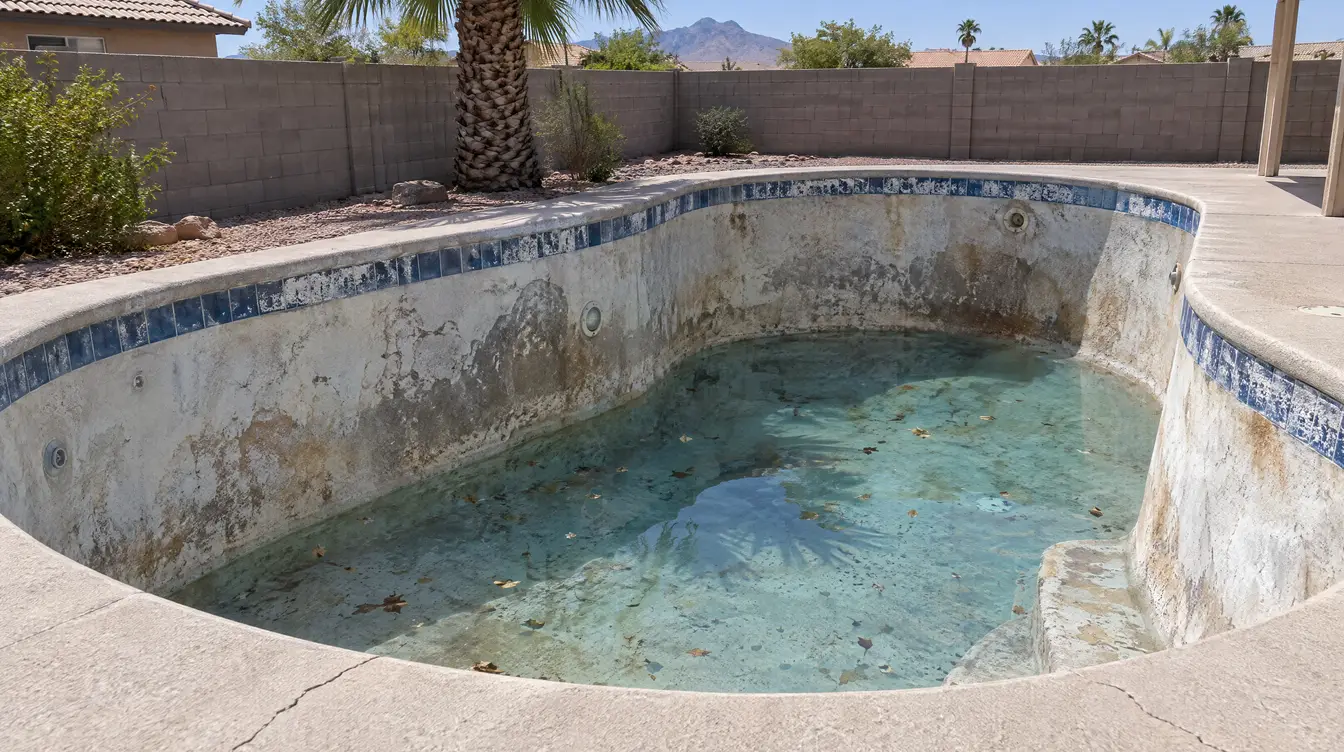
| Finish | Typical life in Arizona | Notes |
|---|---|---|
| White plaster | 7 to 10 years | Shows wear, scale and stains first |
| Quartz | 12 to 18 years | Standard quartz nearer 12 to 15; still plaster-based, so it can etch if chemistry drifts |
| Pebble (including Pebble Tec) | 20 to 30 years | Some Arizona sources quote 15 to 20+ for pebble in general |
Ranges for well-kept pools with balanced water, not promises (Shasta Pools, January 2026; Pebble Tec).
Where these numbers come from
Shasta Pools, a Phoenix builder, gives 7 to 10 years for plaster, 12 to 18 for quartz and 20 to 30 for Pebble Tec, while its figure for pebble finishes in general is 15 to 20+ years. Pebble Tec, the maker, says its finish lasts 20+ years with proper chemistry and maintenance. You will see longer figures on national sites; Arizona's sun, heat and water are why ours are shorter.
What wears a finish out faster in the Valley
- Sun and heat. Shasta Pools says intense UV, extreme heat and heavy chemical demand age finishes early, and that heat makes plaster more prone to etching and staining.
- Hard water. Phoenix tap water ran 10 to 17.6 grains per gallon of hardness (172 to 302 ppm) in the city's 2025 water quality report. As pool water evaporates and you top it off, minerals build up and show as scale, which plaster shows first.
- Chemistry that drifts. Shasta says erosion happens faster here when water chemistry drifts out of balance. Pebble Tec says balanced pH, alkalinity and calcium levels are essential to a finish's long-term life.
- Plastering in extreme heat. Shasta says plaster applied above 90 degrees in low humidity can dry too fast to cure properly, which leaves a weaker finish.
- Light upkeep. Shasta lists twice-daily brushing for a new plaster finish's first month and weekly brushing after that.
How often should you resurface?
Not on a calendar. Resurface when the surface tells you it is done: rough to the touch, stains that come back after an acid wash, cracks or hollow spots, or water that won't stay balanced. KTAR's Rosie on the House column says a pool 10 years or older may be due, so if you have plaster in that 7 to 10 year range, start watching for the signs. If it's only stains on a smooth surface, an acid wash may buy time.
Plan the next one ahead
- Book for cooler months. Fall and winter are the ideal time here, because Arizona's dry heat can crack fresh plaster (Rosie on the House).
- Compare cost per year, not just price. A $6,000 plaster job that lasts 8 years is about $750 a year; an $11,000 pebble job that lasts 20 years is about $550 a year.
- Read the warranty. Finish warranties are often shorter than the finish's life, and a claim may need your water chemistry records.
- Selling soon? Our home sale guide covers how pool repairs fit into an Arizona sale..
Warranties and records
Keep a simple water log from the day the pool is refilled: date, pH, alkalinity, calcium hardness, chlorine and anything you added. It helps the finish last and supports a warranty claim if you ever need one.
Where these numbers come from: Shasta Pools, which pool finishes hold up best in Arizona's sun and heat (January 23, 2026); Shasta Pools, plaster vs pebble pool finish (July 29, 2025); Pebble Tec, plaster vs pebble swimming pool finishes; City of Phoenix, 2025 Water Quality Report; KTAR Rosie on the House, how to resurface your swimming pool (July 30, 2020); HomeGuide price ranges, as cited on our finish comparison page. Prices are ranges, not quotes.
Common questions
How long does pool plaster last in Phoenix?
Usually 7 to 10 years with balanced water and regular brushing. Heat, sun and hard water shorten it compared with cooler places.
How long does Pebble Tec last?
Pebble Tec says 20+ years with proper chemistry and maintenance; Shasta Pools gives 20 to 30 years for Pebble Tec in Arizona.
Is quartz worth it over plaster here?
Quartz usually lasts 12 to 18 years against 7 to 10 for plaster and holds its color better in strong sun, so it often costs less per year.
Can I make my finish last longer?
Keep pH, alkalinity and calcium balanced, brush often (plaster especially), and watch for scale as water evaporates and gets topped off.
Planning guides
- Pool resurfacing costPlaster, quartz and pebble price ranges and what moves your quote.
- Cost calculatorEnter your pool's size for a price range by finish.
- Pool replasteringHow a replaster week goes, what it costs and what to ask.
- Plaster vs quartz vs pebbleCost, lifespan and feel compared for Valley water and sun.
- Pool tile and copingWaterline tile and coping costs, and why to do them in one drain.
- Signs it's timeEight signs your pool surface is worn out, and what each one means.
- Acid wash or resurfaceWhen an acid wash is enough, and when it just delays the real fix.
- Pool remodel costFinish, tile, coping and deck in one job: ranges and licenses.
- Choosing a contractorLicense checks, written quotes, contracts and payments in Arizona.
- Pebble Tec costPebble Tec prices by pool size and line, plus the warranty.
- Best time to resurfaceHeat, the spring rush and Phoenix's refill timing, month by month.
- HOA approval for resurfacingWhat Arizona law says and what to send your HOA before the drain.
- Paying for a resurfaceCash, pool loans, home equity or a card promo: what to compare.
- Pool deck resurfacing costPer square foot prices to resurface or replace a pool deck.
- How long resurfacing takesDrain to swim: each step, what slows it and how to plan.
- Selling or buying a homePool plaster flagged in an inspection: deadlines, licensed repairs, quotes.
- Patch or resurface?Chips, cracks and hollow spots: when a patch holds and when it won't.
- Picking a finish colorWhite, gray, blue or dark: how each shade looks, stains and fades in our sun.
- Warranties and your rightsMaterial vs workmanship warranties, what limits them, and ROC complaints.
Get local quotes
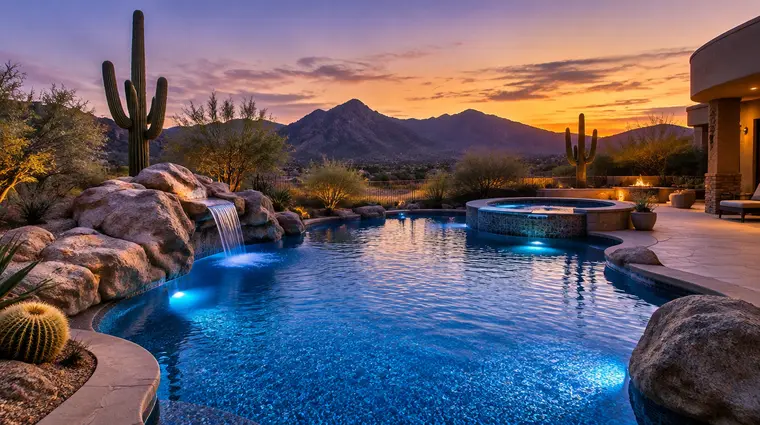
Scottsdale and Paradise Valley
Scottsdale, North Scottsdale, Paradise Valley, Fountain Hills, Cave Creek
Pool resurfacing in the Scottsdale area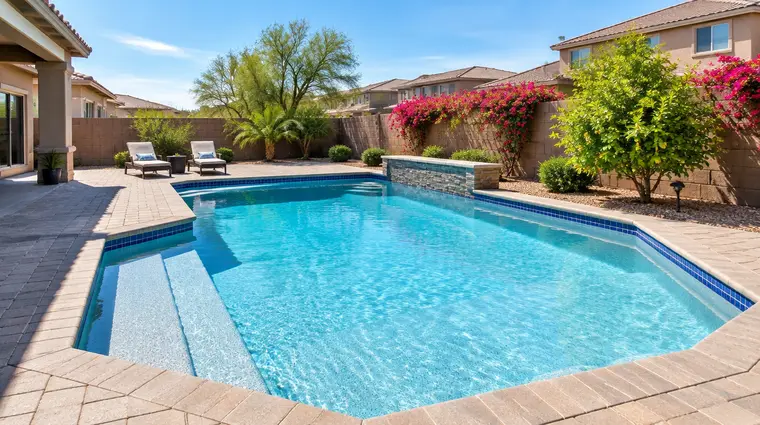
East Valley
Chandler, Gilbert, Mesa, Tempe, Queen Creek
Pool resurfacing in the East Valley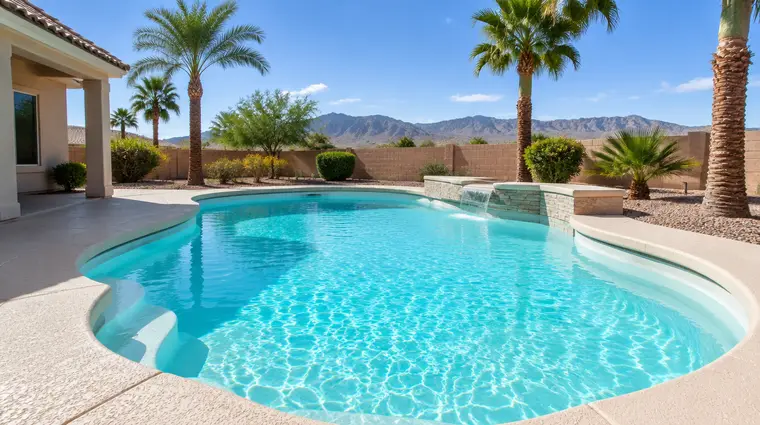
West Valley
Glendale, Peoria, Surprise, Goodyear, Avondale
Pool resurfacing in the West ValleyGet a resurfacing quote this week
Spring dates go fast, so it pays to book early. It takes about a minute to ask.
Start my free quote