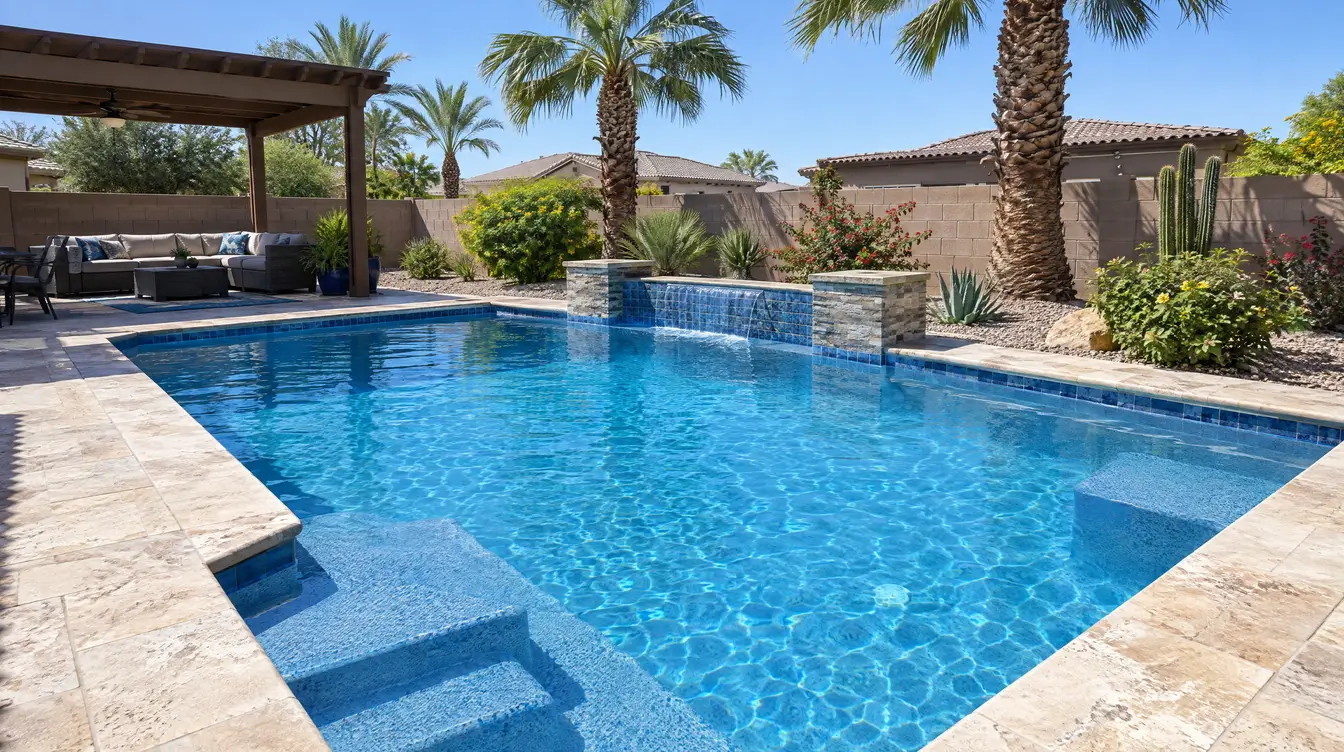
How the finish color changes the water
The water takes most of its color from the surface underneath it. Pebble Tec, which makes pebble finishes, says pool water color "is primarily determined by the color of the pool finish," and sorts its colors by the water they give: deep dark blue, dark blue, medium blue, light blue, teal and green.
Depth, sunlight, time of day, shade, and the color of your tile and deck all shift how a finish looks once the pool is filled, so a small dry swatch won't show you the result. Pebble Tec suggests viewing colors in real pools rather than swatches alone.
- White. The classic look, with light, bright blue water (ASP).
- Gray. A softer look that ASP describes as more stain-resistant than white.
- Blue. Deepens the blue of the water (ASP).
- Dark gray and black. Deep, dark water (ASP).
Which colors hide stains and algae
ASP, a national pool service company, says stains and algae show up on a white finish more easily than on other colors, that gray is more stain-resistant, and that a darker shade can help mask algae and some debris between cleanings.
That's about what you see, not what's there. ASP also says a darker finish does not mean you need less cleaning. Valley tap water is hard, and smooth white plaster shows scale and etching first, which our finish comparison covers.
Does a dark finish make the water hotter?
A little, but probably less than people expect. ASP says darker colors absorb and retain more heat from the sun, and that in warmer regions a lighter color can help keep the water cooler.
Shasta Pools, a Phoenix builder, says darker finishes may absorb more heat but that "the effect on water temperature is generally minimal," and that depth, size and sun exposure matter more (Jan 2026).
Both are contractors' views, not measurements, and we haven't found a reliable temperature figure, so we don't quote one. If your pool sits in full afternoon sun and already runs warm in July, that's a fair reason to lean lighter. If it's partly shaded, pick the color you like.
How colors hold up in Arizona sun
All colored finishes change some over time. The National Plasterers Council's standard pool interior finish disclosure says the shade and color of pigmented surfaces "will vary and 'fade' over time," and that shading, color variation and mottling are normal and not a defect.
- Colored plaster. The same disclosure says the finish is not guaranteed for evenness of color and may not be the exact shade you expected.
- Pebble. Shasta Pools says pebble shows gradual color softening rather than dramatic bleaching or cracking.
- Fiberglass. Shasta says color fading happens gradually, especially in darker gelcoats.
Before you commit
If an even, exact shade matters a lot to you, raise it with each contractor, and ask what their warranty says about color, since the plasterers' standard disclosure doesn't guarantee it. Ask for the finish line and color name in writing on the quote, so every bid is for the same thing.
A starting point, not a rule
White
A bright, classic look, if you don't mind stains and algae showing sooner.
Gray
Softer, and more stain-resistant than white.
Blue
For deeper blue water.
Dark gray or black
A deep, dark look, best if the pool isn't in all-day sun and you still plan to clean as often.
Where these numbers come from: ASP, What color should I plaster my pool? (April 23, 2024); Shasta Pools, which pool finishes hold up best in Arizona's sun and heat (January 23, 2026); Pebble Tec, pool finishes water color guide; National Plasterers Council, pool interior finish disclosure (revised December 16, 2015). Prices are ranges, not quotes.
Common questions
Can I change my pool's color without resurfacing?
Not with plaster. Its color is mixed into the material, so ASP says a new color means replastering. Resurfacing is the time to change color or finish.
Will a dark finish save me cleaning?
No. ASP says a darker shade can mask algae and some debris between cleanings, but it doesn't mean you need less cleaning.
Is uneven color in new colored plaster a defect?
Usually not. The National Plasterers Council's standard disclosure calls shading, color variation and mottling normal for these finishes, and says color evenness isn't guaranteed.
How do I see what a color will really look like?
Look at real pools finished in that color, at several depths, not only a dry sample. Pebble Tec says water color can vary from swatches or samples.
Planning guides
- Pool resurfacing costPlaster, quartz and pebble price ranges and what moves your quote.
- Cost calculatorEnter your pool's size for a price range by finish.
- Pool replasteringHow a replaster week goes, what it costs and what to ask.
- Plaster vs quartz vs pebbleCost, lifespan and feel compared for Valley water and sun.
- Pool tile and copingWaterline tile and coping costs, and why to do them in one drain.
- Signs it's timeEight signs your pool surface is worn out, and what each one means.
- Acid wash or resurfaceWhen an acid wash is enough, and when it just delays the real fix.
- Pool remodel costFinish, tile, coping and deck in one job: ranges and licenses.
- Choosing a contractorLicense checks, written quotes, contracts and payments in Arizona.
- Pebble Tec costPebble Tec prices by pool size and line, plus the warranty.
- Best time to resurfaceHeat, the spring rush and Phoenix's refill timing, month by month.
- HOA approval for resurfacingWhat Arizona law says and what to send your HOA before the drain.
- Paying for a resurfaceCash, pool loans, home equity or a card promo: what to compare.
- Pool deck resurfacing costPer square foot prices to resurface or replace a pool deck.
- How long resurfacing takesDrain to swim: each step, what slows it and how to plan.
- Selling or buying a homePool plaster flagged in an inspection: deadlines, licensed repairs, quotes.
- Patch or resurface?Chips, cracks and hollow spots: when a patch holds and when it won't.
Get local quotes
Scottsdale and Paradise Valley
Scottsdale, North Scottsdale, Paradise Valley, Fountain Hills, Cave Creek
Pool resurfacing in the Scottsdale area
East Valley
Chandler, Gilbert, Mesa, Tempe, Queen Creek
Pool resurfacing in the East Valley
West Valley
Glendale, Peoria, Surprise, Goodyear, Avondale
Pool resurfacing in the West ValleyGet a resurfacing quote this week
Spring dates go fast, so it pays to book early. It takes about a minute to ask.
Start my free quote