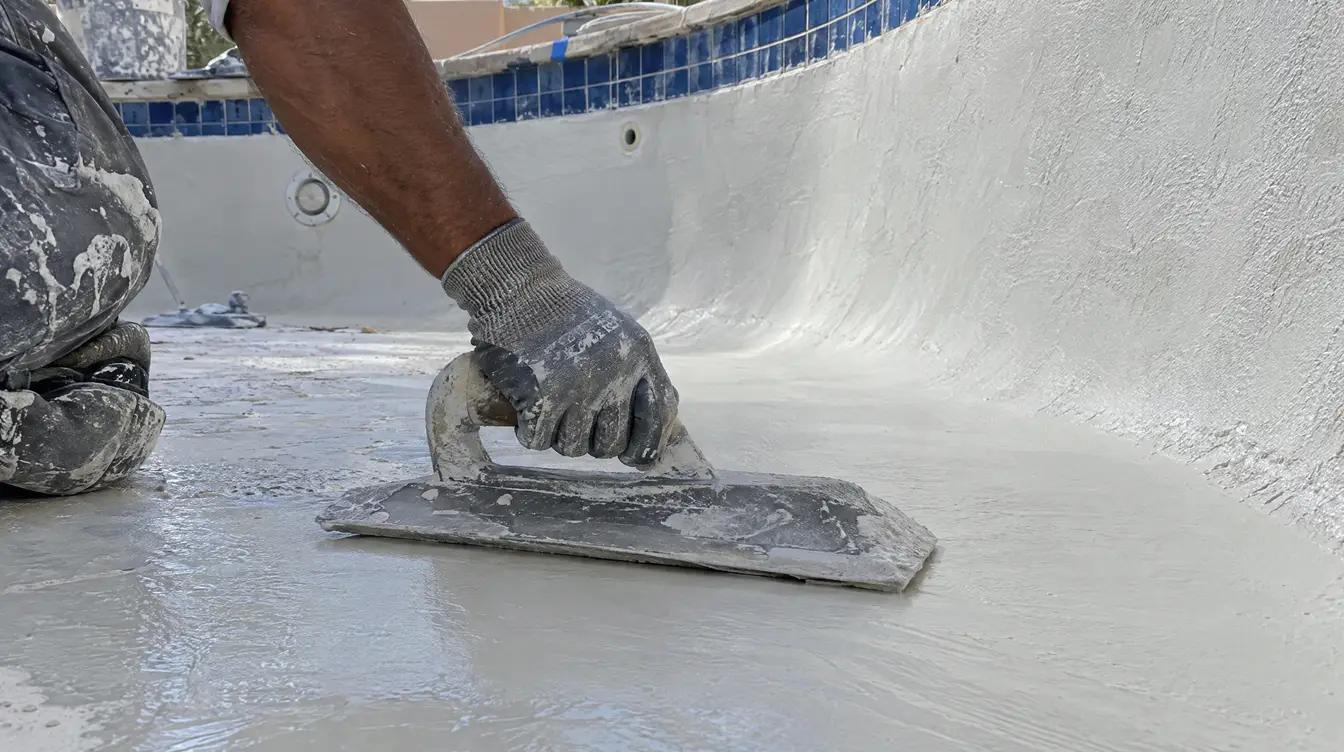
| Step | Typical time | Source |
|---|---|---|
| HOA approval, if your neighborhood has one | Depends on your association | Your HOA |
| Drain the pool | 1 to 2 days | Shasta Pools, Sep 26, 2024 |
| Demolition and prep of the old surface | 2 to 3 days | Shasta Pools, Sep 26, 2024 |
| Apply the new finish and let it set | Set time depends on the finish | Pebble Technology International |
| Cure the new surface | A few days to a week | Shasta Pools, Sep 26, 2024 |
| Whole simple resurface | About 1 to 2 weeks | Shasta Pools, Sep 26, 2024 |
| Wait to swim after the refill | At least 7 days | Orenda |
| Start-up care | 28 days | National Plasterers Council |
Every pool and crew is different. Ask each contractor for drain, application and refill dates in writing.
The timeline, step by step
- HOA approval. If your neighborhood has an HOA, get its sign-off before any work starts. How long that takes depends on your association.
- Draining: 1 to 2 days (Shasta). In Phoenix, drained water goes to your sewer cleanout at no more than about 12 gallons a minute, so a 15,000-gallon pool takes about 21 hours to empty.
- Prep and removal of the old surface: Shasta gives 2 to 3 days for demolition and preparation. Pebble Tec describes this step as stripping the existing surface to make a smooth base for the new finish.
- Applying the new finish. Plaster, quartz or pebble goes on, pebble finishes are washed to expose the stones, and the finish is left to set. Pebble Tec says how long it sits depends on the finish you chose.
- Curing and acid wash. Shasta says the final surface takes a few days to a week to cure. For pebble finishes, Pebble Tec says an acid wash removes the remaining film before the pool is filled.
- Refill. The National Plasterers Council (NPC) says to fill without stopping, as quickly as practical, and to keep people and pets out of the pool while it fills.
- Start-up. The first 28 days of brushing and water balancing. Swimming usually waits about a week of this.
Before the crew arrives: what to do at home
Most of the work is the crew's, but a few things are yours, and the first one can take longer than the resurface itself.
- Get HOA approval first. If your neighborhood has an HOA, send the request before you book a drain date. Our HOA guide, linked above, covers what to send.
- Rule out a leak while the pool is still full. If the water level keeps dropping, it's worth knowing before the old surface comes off. A City of Mesa conservation coordinator suggests turning off your automatic refiller first, then setting a bucket of water on the top step, filled to the pool's level, and comparing the two levels after two or three days. If the pool drops more than the bucket, there is probably a leak in the structure or plumbing.
- Pick your drain day with your city's rules in mind. The drain rules for Phoenix, Mesa, Chandler, Tempe and Fountain Hills are in the next section. Ask the crew where the water goes and who watches for backups in the tubs and showers.
- Plan the refill month if you're a City of Phoenix water customer. Phoenix bases your sewer charge on your average water use in the January to March billing cycles. If you refill in those months, the city says you can request a sewer fee review through MyPHX311.
- Fill it in one go. The National Plasterers Council says to fill to the middle of the skimmer without stopping, as fast as practical, with a clean cloth on the end of the hose in the deep end, and not to let other water sources into the pool. Ask your contractor whether to leave the automatic refiller off until start-up is done.
- Keep people and pets out while it fills. The NPC says no person or pet should be in the pool during the fill.
- Settle who brushes. The NPC start-up calls for brushing the whole surface at least twice a day. Ask whether the crew does that or it's yours, and for how many days.
- Ask how they'll reach the backyard. Where the hoses and equipment go, and whether a gate needs to be unlocked on work days, is worth sorting out before day one.
Day by day, at a glance
These are the published figures from the table above, strung together. Your crew's dates will differ, so get them in writing.
- Days 1 to 2: drain (Shasta Pools).
- Next 2 to 3 days: remove and prep the old surface (Shasta Pools).
- Next: apply the finish and let it set; set time depends on the finish (Pebble Technology International).
- Then a few days to a week: cure, and for pebble an acid wash before the fill (Shasta Pools; Pebble Technology International).
- Refill: one continuous fill (NPC).
- Start-up days 1 to 3: filter runs nonstop for at least 72 hours, no chlorine for the first 48 hours, chlorine to 1.5 to 3 ppm on day 3 (NPC).
- Start-up days 4 to 10: heater stays off until the plaster dust is gone (NPC).
- Day 7 and later: swim once your contractor says the water is balanced and sanitized; Orenda says at least seven days after filling (Orenda; NPC).
- Day 28 and later: salt and robotic cleaners can come back (NPC; Orenda says no robotic cleaners for 30 days).
Draining your pool for a resurface: the rules in your city
Every resurface starts with an empty pool, and the water has to go somewhere legal. Your crew may run the pump, but it's your property and your city's rules, so it's worth knowing them before draining day. Across the Valley the city pages we read agree on the basics: drain into your own yard or the sewer cleanout on your property at about 12 gallons a minute or less, never through a permanent drain line, a street sewer manhole, a neighbor's yard or a wash. Phoenix's flyer adds that someone should check the tubs and showers right after the pump starts, since a fast drain can back water up into the house.
- Phoenix. Use the sewer cleanout or salt-tolerant landscaping, at no more than 12 gallons a minute (720 an hour). Not into the street, a neighbor's yard, a wash or a septic tank. Homes with no cleanout can drain to the right of way only with a city permit.
- Mesa. No permit to drain to your yard or your own sewer cleanout, at about 12 gallons a minute, with the water near neutral (pH 6 to 8) for the sewer. Never toward a street sewer manhole, and the city discourages streets and storm drains. Acid wash and replastering wastewater can't go into the storm drain or the sewer, and the property owner is responsible for the repair company handling it properly.
- Chandler. No permit to drain to your cleanout or keep the water on your property, at no more than 12 gallons a minute. No hard-plumbed drain lines. If you can't find your cleanout, the city takes requests for an exception to drain into the street.
- Tempe. Chlorine and bromine must read zero on a test kit first. Into the cleanout, keep the pump under 12 gallons a minute. Never into an alley or a street sewer manhole. Pools over 35,000 gallons need Environmental Services authorization before draining to the right of way.
- Fountain Hills. Keep the water on your property or send it to your sewer cleanout, unless the Fountain Hills Sanitary District says otherwise. Never into streets, washes or the storm system, and no permanent pool-to-cleanout connection.
- Other cities. Check your city's water or stormwater page before draining. We only list rules we've read on a city's own page, and each city page on this site has its local drain facts.
- Ask your contractor. Where will the water go, at what pump rate, and who watches for backups? Will chlorine be at zero first? And where will acid wash or plaster removal water go?
Bigger jobs take longer
Shasta puts a simple resurface at about 1 to 2 weeks before start-up, and a full remodel with new tile, coping or equipment at about 4 to 8 weeks.
After the refill: the 28-day start-up
The NPC publishes a start-up procedure for new plaster finishes. It is advisory, and your contractor may use their own, so ask which one they follow. The NPC's version includes:
- Run the filter nonstop for at least 72 hours.
- Brush the whole surface at least twice a day, and keep up the daily testing and brushing through the first 14 days.
- No chlorine for the first 48 hours. On day 3, bring chlorine to 1.5 to 3 ppm.
- No heater until all plaster dust is gone, which the NPC says is typically between day 4 and day 10.
- No salt for 28 days. The NPC says waiting up to 6 weeks to add salt may help.
- No wheeled devices, robotic cleaners included, until after the 28-day start-up.
- No shock for the first 30 days.
- On day 7, vacuum out any plaster dust that's left with a brush vacuum.
When can you swim again?
The NPC says not to swim until the water is balanced and sanitized, and it doesn't give a day. Orenda says to wait at least seven days after filling, assuming its start-up method, because new plaster is still hardening and feet can leave lasting marks. Orenda also advises no heater until at least day five, and no wheeled, tracked or robotic cleaners for the first 30 days. If your start-up runs differently, it can take longer, so ask your contractor for the go-ahead before the first swim.
What can slow the job down
- Weather. Shasta tells Arizona homeowners to be ready for delays during the summer monsoon, and summer heat changes how crews plaster.
- Permits on larger remodels. Shasta says permits usually take 1 to 2 weeks and can hold up the whole project, so apply early.
- Tile, coping and repairs found once the pool is empty add days.
- Busy season. Shasta says off-season work can move faster because contractors have more availability.
- HOA approval, if your association requires it.
How to plan it
- Want to swim by spring? Start the conversation in fall or early winter.
- Get the schedule in writing: drain date, application day, refill day and who handles start-up.
- Ask whether the start-up brushing and chemistry for the first weeks are included in the price, or yours to do.
- City of Phoenix water customers: the city sets your sewer charge from January to March water use, so refilling outside those months avoids raising it.
Get a schedule and a price for your pool
Tell us about your pool and up to three licensed local contractors who fit the job can give you dates and a quote to compare.
Where these numbers come from: Shasta Pools, pool remodel timeline (September 26, 2024); National Plasterers Council, start-up procedure; Orenda, when can I swim in a new pool; Pebble Technology International, PebbleTec resurfacing process (January 14, 2025); City of Phoenix pool draining and sewer rate pages, and its Drain/Backwash Pools Legally flyer; City of Mesa, Drain or Backwash Your Pool; City of Chandler, pool drainage; City of Tempe, pool draining; Town of Fountain Hills, Draining Your Pool and Spa; Water - Use It Wisely, is my pool leaking? (City of Mesa conservation coordinator, April 24, 2024); City of Phoenix, water and sewer rates (sewer fee review). Prices are ranges, not quotes.
Common questions
How long does it take to resurface a pool?
About 1 to 2 weeks for a simple resurface, according to Shasta Pools, plus start-up time before swimming. Full remodels run about 4 to 8 weeks.
How long after resurfacing can I swim?
Orenda says to wait at least seven days after the pool is filled. The National Plasterers Council says to wait until the water is balanced and sanitized. Your contractor should tell you when.
How long does it take to drain a pool in Phoenix?
Phoenix limits drain flow to the sewer cleanout to about 12 gallons a minute, so a 15,000-gallon pool takes about 21 hours.
Can I drain my pool into the street in Phoenix?
No. Phoenix says not to drain into the street. Use your sewer cleanout or salt-tolerant landscaping. If your home has no cleanout, draining to the right of way needs a city permit.
When can I turn the heater on or add salt?
The NPC says no heater until all plaster dust is gone (typically day 4 to day 10) and no salt for 28 days.
Can I use my robotic cleaner right away?
No. The NPC says no wheeled devices until after the 28-day start-up, and Orenda says no wheeled, tracked or robotic cleaners for the first 30 days.
What should I do before my pool gets resurfaced?
Get HOA approval if you have one, check for a leak while the pool is full, and agree on drain day, refill timing and who brushes during start-up. City of Phoenix customers who refill in the January to March billing cycles can request a sewer fee review.
Planning guides
- Pool resurfacing costPlaster, quartz and pebble price ranges and what moves your quote.
- Cost calculatorEnter your pool's size for a price range by finish.
- Pool replasteringHow a replaster week goes, what it costs and what to ask.
- Plaster vs quartz vs pebbleCost, lifespan and feel compared for Valley water and sun.
- Pool tile and copingWaterline tile and coping costs, and why to do them in one drain.
- Signs it's timeEight signs your pool surface is worn out, and what each one means.
- Acid wash or resurfaceWhen an acid wash is enough, and when it just delays the real fix.
- Pool remodel costFinish, tile, coping and deck in one job: ranges and licenses.
- Choosing a contractorLicense checks, written quotes, contracts and payments in Arizona.
- Pebble Tec costPebble Tec prices by pool size and line, plus the warranty.
- Best time to resurfaceHeat, the spring rush and Phoenix's refill timing, month by month.
- HOA approval for resurfacingWhat Arizona law says and what to send your HOA before the drain.
- Paying for a resurfaceCash, pool loans, home equity or a card promo: what to compare.
- Pool deck resurfacing costPer square foot prices to resurface or replace a pool deck.
- Selling or buying a homePool plaster flagged in an inspection: deadlines, licensed repairs, quotes.
- Patch or resurface?Chips, cracks and hollow spots: when a patch holds and when it won't.
- Picking a finish colorWhite, gray, blue or dark: how each shade looks, stains and fades in our sun.
- Warranties and your rightsMaterial vs workmanship warranties, what limits them, and ROC complaints.
- How long a resurface lastsPlaster, quartz and pebble lifespans here, and what wears them out.
- Resurface or remove the poolRemoval and fill-in costs next to resurfacing, plus the permit step.
- Check your quoteIs your resurfacing quote fair? Price, line items and contract checks.
Get local quotes

Scottsdale and Paradise Valley
Scottsdale, North Scottsdale, Paradise Valley, Fountain Hills, Cave Creek
Pool resurfacing in the Scottsdale area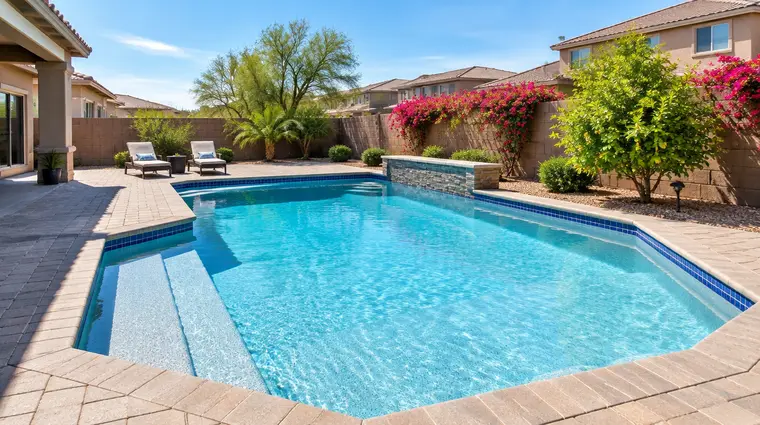
East Valley
Chandler, Gilbert, Mesa, Tempe, Queen Creek
Pool resurfacing in the East Valley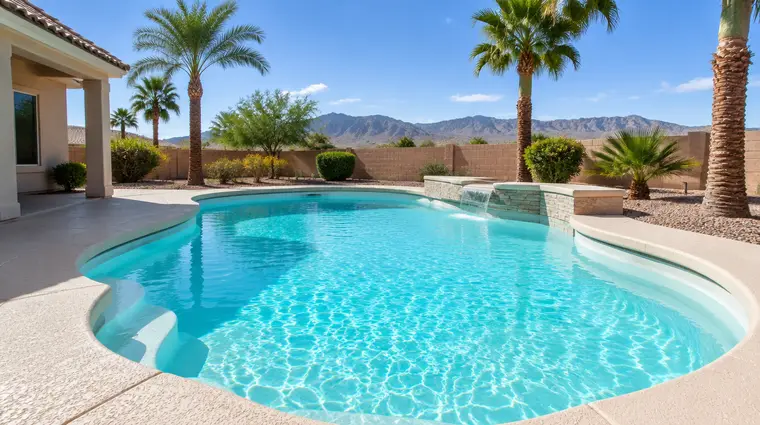
West Valley
Glendale, Peoria, Surprise, Goodyear, Avondale
Pool resurfacing in the West ValleyGet a resurfacing quote this week
Spring dates go fast, so it pays to book early. It takes about a minute to ask.
Start my free quote