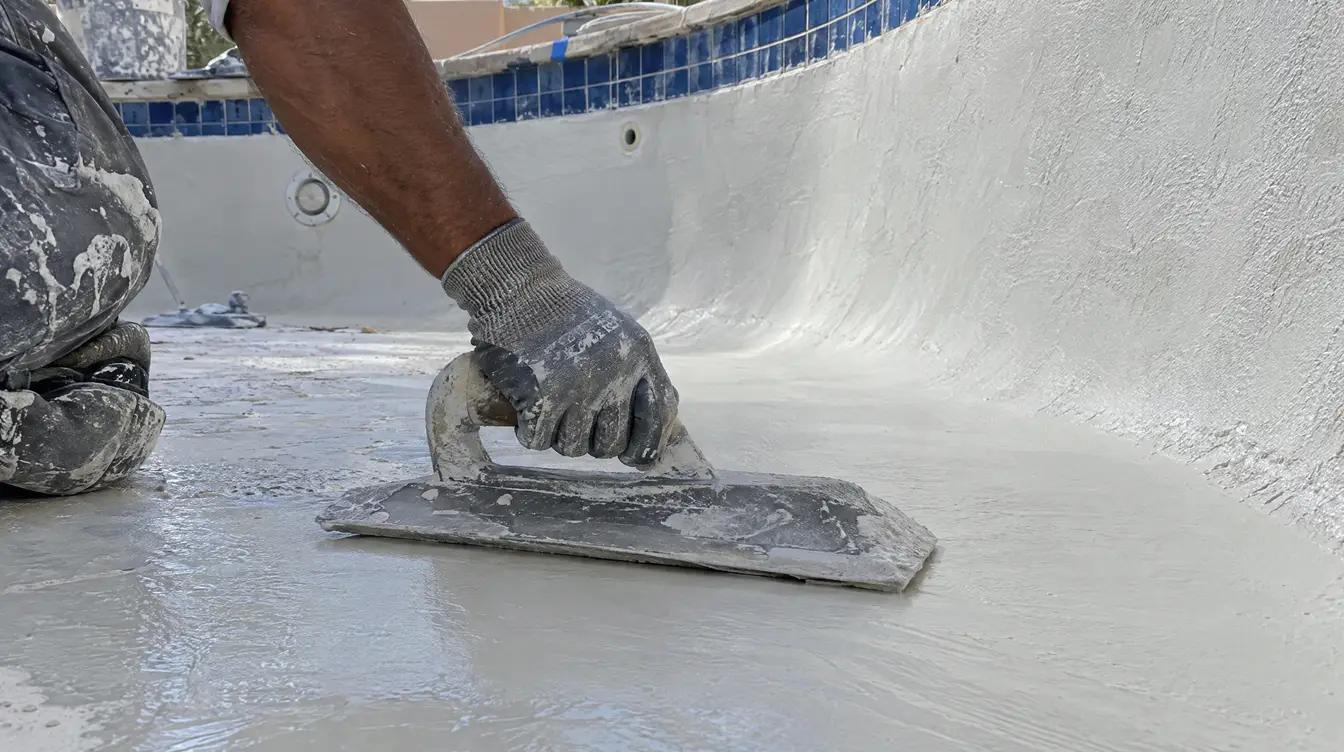
1. Check the license, and the class
Look the company up on the Arizona Registrar of Contractors (ROC) contractor search, and confirm its license class covers the work. A B-5 (residential pools and spas) or KA-5 license covers pool work, and R-36 plastering covers pool interiors but not tile. An R-6 pool service license does not allow a complete replacement of a plaster or pebble interior, so a service company can't do a full replaster on that license alone.
The ROC also suggests calling the phone number on the license record to confirm the person you are dealing with really represents that company, since ads aren't verified and a number in an ad can be answered anywhere.
2. Get at least three written estimates
The ROC's own advice is to get written estimates from at least three contractors and check their references. For a resurface, ask each one to itemize the same lines so you can compare like for like: the prep (full chip-out or bond coat), the finish brand, line and color, waterline tile and coping if any, draining and refilling, startup chemistry and brushing, and the warranty from both the finish maker and the installer.
Quotes for the same pool can differ a lot because of prep. If one is far lower, ask what it leaves out.
3. Know what the contract must say
Arizona law (A.R.S. 32-1158) says a contract over $1,000 between a contractor and a property owner must be in writing and include the items below. Compare the contract to the estimate before you sign, so the price and scope match. Any change later should be a written change order signed by both of you.
- The contractor. Name, business address and ROC license number.
- You and the job site. Your name and mailing address, and the job address.
- Dates. The date you both sign and the estimated completion date.
- The work. A description of the work to be done.
- The price. The total you will pay, including taxes.
- Deposits and draws. Any advance deposit, and each progress payment with the stage of work when it's due.
- Your complaint rights. A notice in at least 10-point bold type of your right to file a written complaint with the ROC, with its phone number and website.
4. Pay safely
The ROC says never to pay in cash, to make checks out to the company named in your signed contract, and not to let payments get ahead of the work. Special-order materials can be an exception, so a deposit for them is normal, but tie the rest of the payments to stages you can see.
5. Know your protections
If a licensed contractor does substandard work or breaks code, you can file a complaint with the ROC within two years of the date the last work was done. Arizona's Residential Contractors' Recovery Fund can also pay a homeowner up to $30,000 to have work corrected or finished, under certain conditions. Neither helps you if the contractor wasn't licensed, because the ROC has no recourse against unlicensed contractors.
Arizona's handyman exemption only covers small jobs under $1,000, labor and materials together, that need no permit. A pool resurface is well past that, so it calls for a licensed contractor.
6. Tell them about your HOA and permits
The ROC puts it on the owner to tell the contractor about any HOA rules (CC&Rs) before signing, and says permits are the owner's responsibility, so agree in writing who pulls any permit that's needed. Gated communities may also need crew passes or set work hours.
When to walk away
Door-to-door deals
The ROC warns about traveling crews offering cheap work door to door. Get your own quotes instead.
No license number
A real contractor gives you an ROC number you can look up. "Licensed, bonded and insured" in an ad isn't proof.
Cash only
The ROC says never pay in cash. Checks go to the company named in your contract.
Big money up front
Payments shouldn't get ahead of the work, apart from special-order materials.
Wrong license class
A service-only R-6 license can't cover a full replaster. Check the class, not just the number.
Vague quote
No prep method, finish line or warranty on paper makes quotes impossible to compare.
Where these numbers come from: Arizona Registrar of Contractors, Before You Hire a Contractor; A.R.S. 32-1158 and 32-1158.01 (2025 text); Arizona Administrative Code R4-9-103 and R4-9-104, contractor license classes; Housecall Pro on Arizona's handyman exemption (A.R.S. 32-1121). Prices are ranges, not quotes.
Common questions
How do I check a pool contractor's license in Arizona?
Search the company or license number on the Arizona Registrar of Contractors website, check that the license is active and the class covers the work (B-5, KA-5 or R-36 for a replaster), and call the number on the license record to confirm who you're dealing with.
How many quotes should I get to resurface my pool?
At least three written estimates, which is what the Registrar of Contractors recommends. Ask each contractor to itemize prep, finish, tile, draining, startup and warranty so you can compare them line by line.
Does Arizona limit the deposit on a pool resurface?
Arizona's 15% down payment cap in A.R.S. 32-1158.01 is written for building or installing a new in-ground pool or spa, not for resurfacing. For a resurface, the ROC's advice is not to let payments get ahead of the work, and the contract has to list any deposit and when each progress payment is due.
What is the Arizona Residential Contractors' Recovery Fund?
A state fund that can pay homeowners, under certain conditions, up to $30,000 to have work corrected or completed when a licensed residential contractor doesn't do the job right. It only covers licensed contractors.
Are the contractors you match me with licensed?
We only pass requests to contractors with an active Arizona ROC license whose class covers resurfacing, and we check it before matching. Still look up any contractor yourself before you sign, and your contract is with the one you hire.
Planning guides
- Pool resurfacing costPlaster, quartz and pebble price ranges and what moves your quote.
- Cost calculatorEnter your pool's size for a price range by finish.
- Pool replasteringHow a replaster week goes, what it costs and what to ask.
- Plaster vs quartz vs pebbleCost, lifespan and feel compared for Valley water and sun.
- Pool tile and copingWaterline tile and coping costs, and why to do them in one drain.
- Signs it's timeEight signs your pool surface is worn out, and what each one means.
- Acid wash or resurfaceWhen an acid wash is enough, and when it just delays the real fix.
- Pool remodel costFinish, tile, coping and deck in one job: ranges and licenses.
- Pebble Tec costPebble Tec prices by pool size and line, plus the warranty.
Get local quotes

Scottsdale and Paradise Valley
Scottsdale, North Scottsdale, Paradise Valley, Fountain Hills, Cave Creek
Pool resurfacing in the Scottsdale area
East Valley
Chandler, Gilbert, Mesa, Tempe, Queen Creek
Pool resurfacing in the East Valley
West Valley
Glendale, Peoria, Surprise, Goodyear, Avondale
Pool resurfacing in the West ValleyGet a resurfacing quote this week
Spring dates go fast, so it pays to book early. It takes about a minute to ask.
Start my free quote