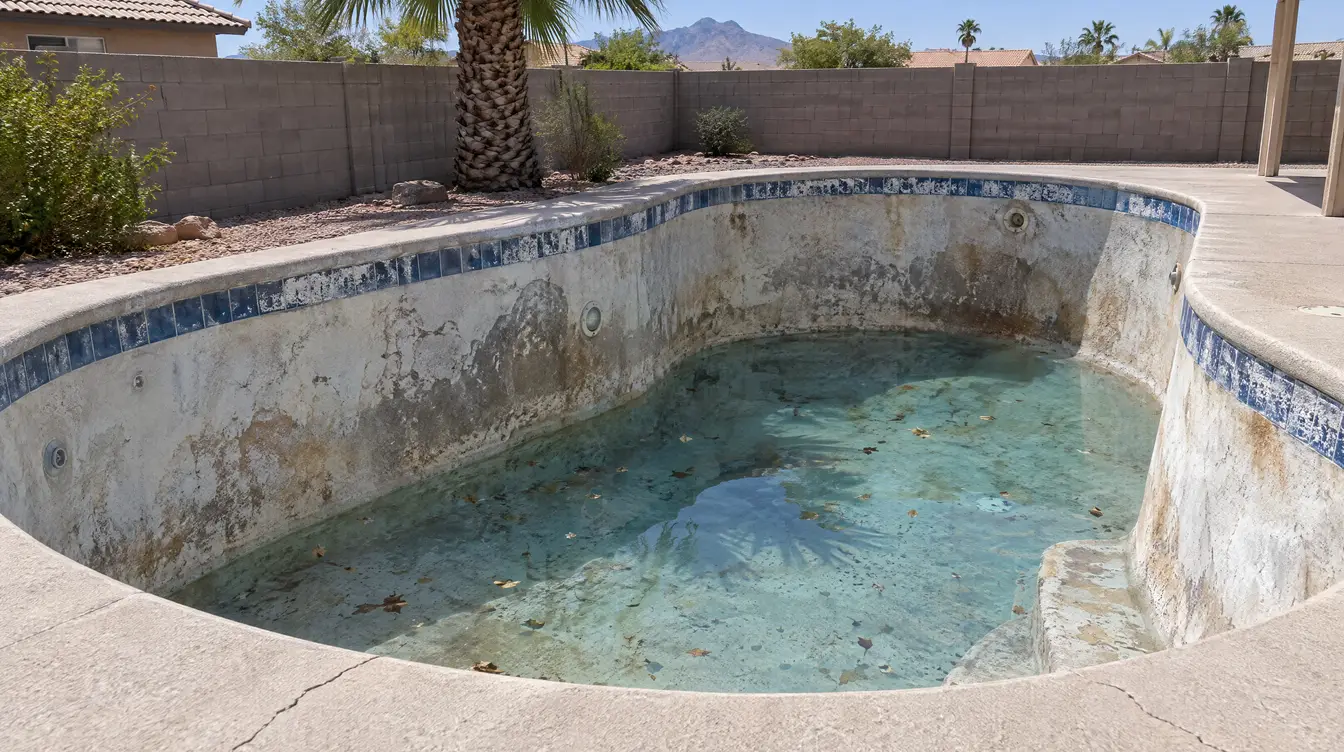
Start with a tap test
Plaster that's still bonded to the shell sounds solid when you tap it. Plaster that has separated sounds hollow, or "drummy." With the handle of a pool brush, tap the steps, benches and any surface you can reach in a rough grid every couple of feet (Aiper, Oct 2026).
Note where the hollow sounds are and how much area they cover. That map is the most useful thing you can hand a contractor.
When a patch is usually enough
- A few small chips. One or a few chips or pop-outs, often on steps, benches or around fittings, with solid-sounding plaster all around them.
- Fine hairline cracks. Surface check cracking you can't catch a fingernail in is usually cosmetic.
- One small hollow area. The hollow sound is clearly limited, with tight, solid plaster all around it.
What a good patch looks like
A good patch is chipped back to sound plaster, with the edges undercut so the new material locks in. Small underwater patches can be done with underwater plaster or epoxy putty without draining the pool (Aiper; Pool Research, Sep 2024). Expect a patch not to match the color of the finish around it, especially on older plaster.
When it's time to resurface instead
- Hollow across a large area. One guide puts the tipping point at about a quarter of the surface compromised, and says hollow sounds across a third of the floor mean the finish is already coming off one piece at a time (Aiper).
- Peeling in more than one place. Flaking in several areas usually means the bond is failing behind the surface.
- New bumps keep appearing. Calcium nodules showing up in new spots are a sign of delamination spreading behind the plaster (Aiper).
- Rough all over. Etched plaster that feels like sandpaper underfoot is worn out, and a patch can't fix that.
- Repeat patching. On your second or third round of patches, you keep paying to bring a crew out for a finish at the end of its life.
- Cracks that reopen. If a crack keeps coming back or runs through the shell, the shell may be moving, and no plaster repair will hold. Have a contractor look at the structure first.
If you do resurface
When a resurface is the answer, widespread hollow areas usually mean a full chip-out rather than plastering over the old layer, because a bond coat won't stick to plaster that has already separated (Pool and Spa News).
What repairs cost, and why the number varies
Patch prices depend mostly on the trip, not the material. Angi lists an average Phoenix pool repair of about $604, with most between $186 and $1,023, but that covers all kinds of pool repairs, not only plaster. The material for a small DIY underwater patch runs about $10 to $90 (Pool Research).
Because getting a crew out is most of the cost (Aiper), ask the contractor to sound the whole pool and fix every bad spot in one visit. A full resurface is a different scale of job; our cost guide and calculator have Valley ranges by finish. These are ranges, not quotes.
Who can do the work in Arizona
Arizona law lets someone without a contractor's license take a job only if it is casual or minor, the total price for labor and materials is under $1,000, it doesn't need a local building permit, and it isn't part of a larger project. Anyone advertising under that exemption has to say "not a licensed contractor" (A.R.S. 32-1121(A)(14)).
A small patch can fall under that line. A resurface does not, so it needs a contractor licensed by the Arizona Registrar of Contractors. You can look up any license on the ROC's website before you sign.
What a written repair quote should say
- Location and size. Where each repair is and roughly how big; a photo with the spots marked is ideal.
- The rest of the pool. Whether the contractor sounded the whole surface, and what they found.
- The method. Chipped back to sound plaster, undercut edges, the patch material, and whether the pool is drained.
- Color match. Whether they expect the patch to match the existing finish; it usually won't exactly.
- Any guarantee. Any workmanship guarantee on the repair, in writing.
- Why resurface, if they say so. If they recommend a full resurface instead, the reason in plain terms you can check yourself with the tap test.
Where these numbers come from: Aiper, How to repair pool plaster (updated October 30, 2026); Pool Research, plaster delamination (September 10, 2024); Angi, Phoenix pool repair costs; Arizona Revised Statutes 32-1121; Pool and Spa News on bond coats and chip-outs (2012). Prices are ranges, not quotes.
Common questions
Can I patch pool plaster underwater?
Small spots, yes. Underwater plaster and epoxy putty are made for small repairs without draining. Larger hollow areas or widespread peeling need the pool drained and a proper resurface.
Will a plaster patch match my pool?
Usually not exactly. New patch material rarely matches the color of aged plaster, so plan on the patch being visible, especially on white plaster.
Is a hollow-sounding spot an emergency?
Not by itself, but keep an eye on it. If it grows, cracks open or starts to flake, get it looked at. Open cracks and bumps can let algae and bacteria in behind the plaster.
Can new plaster go right over my old plaster?
Only if the old plaster is still well bonded. Most plasterers will bond only one new coat over an existing one, and hollow areas have to be chipped out first.
Planning guides
- Pool resurfacing costPlaster, quartz and pebble price ranges and what moves your quote.
- Cost calculatorEnter your pool's size for a price range by finish.
- Pool replasteringHow a replaster week goes, what it costs and what to ask.
- Plaster vs quartz vs pebbleCost, lifespan and feel compared for Valley water and sun.
- Pool tile and copingWaterline tile and coping costs, and why to do them in one drain.
- Signs it's timeEight signs your pool surface is worn out, and what each one means.
- Acid wash or resurfaceWhen an acid wash is enough, and when it just delays the real fix.
- Pool remodel costFinish, tile, coping and deck in one job: ranges and licenses.
- Choosing a contractorLicense checks, written quotes, contracts and payments in Arizona.
- Pebble Tec costPebble Tec prices by pool size and line, plus the warranty.
- Best time to resurfaceHeat, the spring rush and Phoenix's refill timing, month by month.
- HOA approval for resurfacingWhat Arizona law says and what to send your HOA before the drain.
- Paying for a resurfaceCash, pool loans, home equity or a card promo: what to compare.
- Pool deck resurfacing costPer square foot prices to resurface or replace a pool deck.
- How long resurfacing takesDrain to swim: each step, what slows it and how to plan.
- Selling or buying a homePool plaster flagged in an inspection: deadlines, licensed repairs, quotes.
Get local quotes
Scottsdale and Paradise Valley
Scottsdale, North Scottsdale, Paradise Valley, Fountain Hills, Cave Creek
Pool resurfacing in the Scottsdale area
East Valley
Chandler, Gilbert, Mesa, Tempe, Queen Creek
Pool resurfacing in the East Valley
West Valley
Glendale, Peoria, Surprise, Goodyear, Avondale
Pool resurfacing in the West ValleyGet a resurfacing quote this week
Spring dates go fast, so it pays to book early. It takes about a minute to ask.
Start my free quote